
ADHD is not a myth: reflections on Channel 4’s documentary
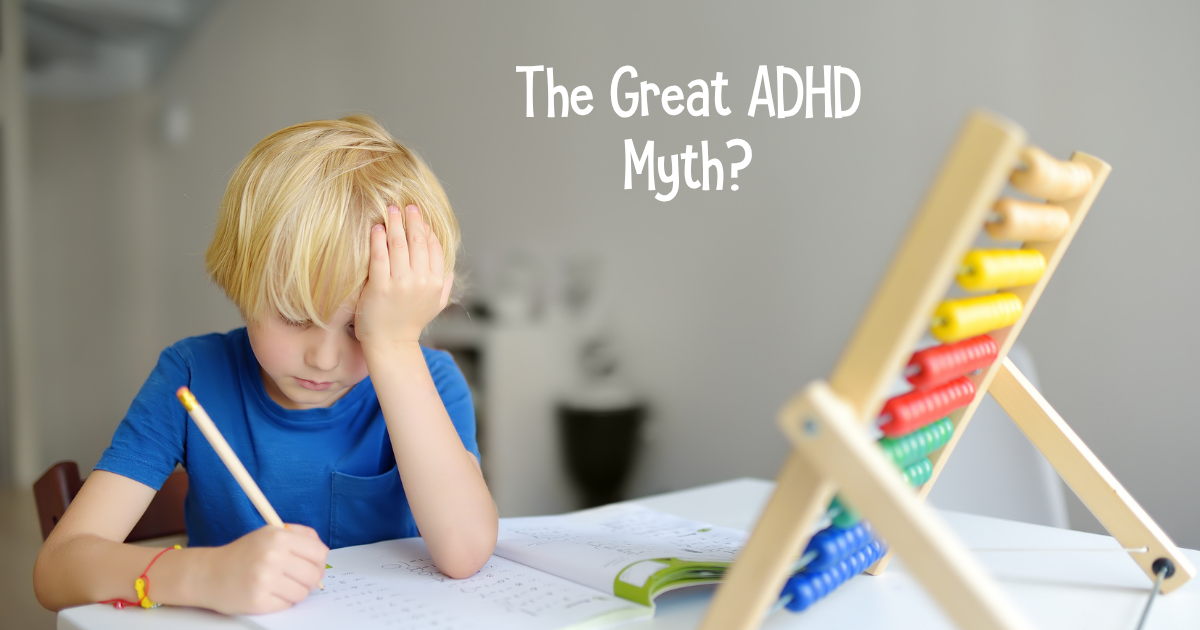
Like many parents, teachers and professionals, I watched Channel 4’s The Great ADHD Myth? with interest. I believe it is important to ask difficult questions about the quality of ADHD assessments, the support offered to families and the circumstances in which medication is prescribed. No system should be beyond scrutiny.
However, questioning aspects of the system is very different from questioning whether ADHD itself is real.
The documentary raised some legitimate concerns, but I was deeply troubled by its overall framing. For families living with ADHD, and for children struggling every day to manage their attention, impulses, emotions and learning, the suggestion that ADHD might be a myth risks feeling dismissive and invalidating.
Since the programme was broadcast, Professor Katya Rubia, an ADHD neuroscience expert who appeared in it, has said that her contribution was misrepresented and used to support a conclusion with which she does not agree. Other ADHD specialists have also criticised the programme’s interpretation of the scientific evidence and its use of an individual child’s experience as if it were a meaningful experiment.
Is an ADHD diagnosis simply based on behaviour?
It is true that ADHD is diagnosed by looking at patterns of behaviour and their impact. There is currently no blood test or brain scan that can diagnose ADHD.
Some questions on ADHD questionnaires can sound surprisingly subjective. What does “often fidgets” mean? How much fidgeting is too much? When does ordinary distractibility become clinically significant?
These are reasonable questions. However, a proper ADHD assessment should never depend on one question, one questionnaire or a brief observation. A diagnosis should not be made solely from a rating scale. It should involve a full clinical and developmental assessment, information from different settings and consideration of whether the difficulties cause significant impairment in everyday life.
For a child, this may include information from parents, school and the child themselves. The clinician should consider the child’s development, education, physical and mental health, family circumstances and possible coexisting conditions.
The important question is not simply, “Does this child squirm?” It is, “Do persistent difficulties with attention, activity levels or impulsivity significantly interfere with this child’s learning, relationships, emotional wellbeing or daily life, across more than one setting?”
There are certainly concerns about rushed or poor-quality assessments, particularly when demand is high and services are stretched. Those concerns should lead us to insist upon careful, thorough and ethical assessments. They should not lead us to conclude that ADHD does not exist.
What can brain research tell us?
I would have welcomed a more thoughtful explanation of the neuroscience.
The fact that ADHD cannot be identified by looking at an individual brain scan does not mean that it is not a neurodevelopmental condition. Research has found average differences between groups of people with and without ADHD, including differences in the development and functioning of networks involved in attention, motivation, inhibition and executive functioning. However, these differences are generally small, vary between individuals and cannot currently be used as a diagnostic test.
ADHD also cannot be reduced to the simple idea that someone has “too little dopamine”. Dopamine and noradrenaline are involved in the brain systems that support attention, motivation, alertness and executive control, but the biology is far more complex than a single chemical shortage.
Research has explored how the brain moves between networks involved in internally directed thought and those needed for focused, goal-directed activity. Some people with ADHD appear to find it harder to regulate this transition consistently. This may help us understand why a child can become completely absorbed in something that interests them, yet struggle enormously to begin or sustain attention on a less stimulating task. This is not a lack of intelligence or effort. It is a difficulty regulating attention.
Hormonal changes may also influence ADHD symptoms, particularly in girls and women, although this is still a developing area of research. It deserved recognition, especially because ADHD can present differently across individuals and throughout a person’s life.
The missing children with inattentive ADHD
One of the greatest omissions for me was inattentive ADHD.
Not every child with ADHD is visibly hyperactive. Some children sit quietly, stare out of the window, lose track of instructions, forget what they have just read or take an extremely long time to complete their work. They may appear dreamy, disorganised or unmotivated.
Because these children are not necessarily disrupting the classroom, they can be overlooked. This is particularly common among girls, whose difficulties may be internalised or carefully masked. A lot of girls I have worked with presented with anxiety disorders, depression and sometimes panic attacks and needed medication for those conditions but this was the wrong support. Once they finally had an ADHD diagnosis and their anxiety was under control and they went onto ADHD medication and good ADHD support, their outcomes were significantly changed.
A child does not have to be running around the classroom for ADHD to have a profound effect on their education and wellbeing.
Schools do need to change, but children should not have their choices narrowed
I wholeheartedly agree that schools should become more responsive to neurodiversity. Children benefit from movement breaks, practical learning, creativity, time outdoors, carefully structured teaching and environments with fewer unnecessary distractions.
However, I became uncomfortable with the suggestion that children with ADHD might simply need more opportunities for sport or creative activities.
Many of the children with ADHD whom I have taught and assessed are extremely academic. They may be fascinated by chemistry, physics, mathematics, literature or computer science. They deserve access to those subjects just as much as any other child.
We should not respond to a child’s difficulty sitting still by quietly steering them away from academic learning. That risks replacing one form of exclusion with another.
The answer is not to decide that some children are “academic” while others should be outside playing sport. The answer is to make academic learning more accessible. This might include shorter teaching sections, movement, visual prompts, reduced distractions, explicit instructions, assistive technology, additional processing time and opportunities to demonstrate knowledge in different ways. And of course, medication, in my experience can make a significant difference here.
We must change the environment, but we must also help and enable children to develop the skills they need to pursue the future they want.
Attention affects access to learning
Whether we like the current education system or not, children need to be able to access teaching and develop fundamental skills.
A child must sustain attention long enough to hear an instruction, follow an explanation, read to the end of a paragraph and hold ideas in mind. Later, they may need to organise those ideas into an essay, solve a multistep problem or retrieve information under exam conditions.
When ADHD is unsupported, these tasks can become extraordinarily difficult. This does not mean the child lacks knowledge or ability. Sometimes the greatest frustration is that the child understands far more than they can consistently show.
Education should certainly become more flexible. Nevertheless, qualifications and training remain gateways to many careers. Children with ADHD should not lose access to those opportunities because the right support was not available.
“I just want my child to be happy”
One mother in the documentary said that she simply wanted her son to be happy. Every parent can understand that.
Happiness and wellbeing matter enormously. A child should never be reduced to grades, test scores or how quietly they can sit in a classroom. At the same time, happiness cannot always be separated from a child’s longer-term opportunities. Persistent school failure can affect self-esteem, mental health, relationships, qualifications and employment. Research summarised in the World Federation of ADHD International Consensus Statement associates ADHD with increased risks of educational underachievement, unemployment, accidental injury, substance misuse and poorer quality of life.
These are group level risks, not a prediction of any one child’s future. Children with ADHD can and do thrive. The purpose of recognising the risks is not to frighten families. It is to show why timely support matters.
We should want children to be happy now and to have meaningful choices later. Those aims do not have to compete.
Medication deserves a more balanced discussion
Medication is not right for every child, and side effects must always be taken seriously. A child’s own feelings should be listened to, and treatment should be regularly reviewed. However, trying medication briefly cannot represent the careful process through which ADHD medication is normally introduced and adjusted.
Large scale research has found that several ADHD medications reduce core symptoms in children and adolescents, although benefits, side effects and tolerability differ. Medication should never be presented as either a miracle cure or something inherently harmful. It is a clinical treatment that requires individual assessment, informed choice and careful monitoring. No parent should start, alter or stop a child’s medication because of a television programme. Any concerns should be discussed with the prescribing clinician.
There are many types of both stimulant and non-stimulant ADHD medications, so it is not accurate to talk about all medication as if it behaves in the same way. The effects of many formulations wear off within the day, although the duration varies considerably. Other medicines work differently and may need to be taken consistently before their full benefit becomes clear.
Different ADHD medications work differently for different people – our biochemistry and ADHD presentation is unique. The children I have taught over the years have had different responses to different ADHD meds, no one medication was the winning formula. Some children need 2 different types. Some have had adverse side effects to a certain type but brilliant results when the medication has changed. Clinicians usually begin with a low dose and gradually adjust it while monitoring symptoms, functioning and side effects. NICE guidance recommends recording symptoms, impairment and adverse effects at every dose change, with feedback from parents and teachers. The aim is to find the best balance between meaningful benefits and tolerable side effects. This process is called titration, and it can take weeks. Taking a medication for one day provides very limited information about whether it is the right medicine, formulation or dose.
For some children, medication improves concentration and reduces impulsivity. For others, its greatest benefit may be emotional regulation. Parents sometimes describe a child who can finally pause before reacting, recover from frustration or experience a sense of calm that was previously unavailable to them. Many children I work with talk about the relief they feel when they can finally stay on task and finish their work. When they can finally enjoy a good book because they were able to focus on the story without their brain wondering halfway through each page. When they could actually sit still in a classroom and follow instructions without feeling the awful panic of not knowing what they may have missed. When they could actually stay fully attentive in an exam and remember and record everything that they knew. The wonderful feeling of slowly realising your potential rather than always being at the bottom of the class.
Healthy habits matter, but they are not proof that ADHD is a myth
Time outdoors, physical activity, sleep, regular meals and a balanced diet can all support a child’s physical and emotional wellbeing. There are so many studies that prove that good nutrition and regular exercise is an essential part of ADHD care.
In the documentary, several things appeared to change at once, including medication, screen use, diet, exercise, outdoor activity and family routines. If a child then feels or behaves differently, it is impossible to know which change was responsible. It may also be that different outcomes moved in different directions. A child might appear happier or more sociable while simultaneously finding classroom concentration and academic work harder.
That individual experience deserves to be heard, but it is not a controlled scientific experiment and cannot tell us what other families should do.
Healthy routines and appropriate medical treatment are not mutually exclusive. Many children benefit from both.
ADHD rarely exists in isolation
The documentary also missed an important part of the picture: ADHD often coexists with other conditions.
A child may have ADHD alongside dyslexia, dyscalculia, developmental language disorder, autism, anxiety, coordination difficulties or sleep problems. Research confirms that ADHD and reading difficulties occur together more often than would be expected by chance.
This matters because each element of the child’s profile may require different support.
Medication may help a child regulate their attention, but it does not teach them to read. A structured, cumulative and evidence informed reading intervention is still needed for dyslexia. Equally, an excellent reading programme cannot remove the attention and executive functioning difficulties caused by ADHD.
A child with both ADHD and dyslexia may be working exceptionally hard to manage two different barriers at once. If we consider only behaviour, or only reading accuracy, we may miss the complexity of what that child is experiencing.
What a genuinely balanced documentary might have shown
I would have liked to hear from more children and adults who understand their diagnosis positively.
I would have liked to hear from families for whom carefully monitored medication has been life changing, alongside families who have decided it is not right for them.
I would have liked to hear from classroom teachers, specialist teachers, SENCos and assessors who see the direct impact of ADHD on learning. They could have described children who understand the lesson but cannot sustain attention long enough to record an answer, children whose thoughts disappear before they reach the page and children who begin to believe they are lazy or incapable.
Most importantly, I would have welcomed a comparison between outcomes for children whose ADHD is recognised and properly supported and those who receive no appropriate support.
There are valid conversations to be had about diagnostic standards, waiting lists, private assessment, school environments, medication, lifestyle and the pressures placed upon children. We should have those conversations openly.
But we must begin with the evidence and with respect for lived experience.
ADHD is not a myth. The struggles of children and families are not a myth. Nor are the intelligence, creativity, curiosity and potential of people with ADHD.
Children do not need us to choose between accepting them as they are and helping them access learning. They need both.
They need adults who understand their brains, recognise their strengths, remove unnecessary barriers and provide effective support when it is needed.
Every child deserves the chance not simply to fit into education, but to learn, flourish and discover how far they can fly.
This article offers an educational and personal perspective and is not individual medical advice. Parents who have concerns about a child’s attention and concentration should seek advice from an ADHD specialist.